
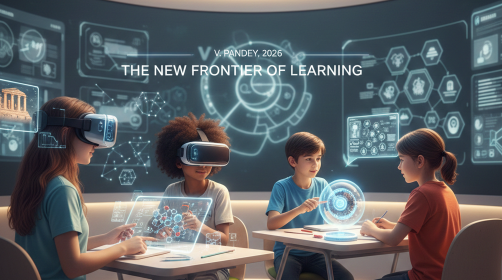
The way students learn has changed dramatically over the past two decades. Digital textbooks, online classrooms, educational apps, and video tutorials have transformed the traditional learning environment. Today, another major shift is underway as artificial intelligence becomes a regular part of the educational experience. A growing number of students are turning to AI-powered tools for research assistance, language practice, writing support, organization, and personalized tutoring. What was once considered advanced technology has become increasingly accessible, allowing learners to receive instant explanations and guidance at any time of the day.
This growing reliance on AI reflects broader changes in society. Students are expected to absorb large amounts of information while balancing academic demands, extracurricular activities, and future career preparation. Intelligent tools offer ways to make learning more efficient and personalized. However, the rise of AI in education also raises important questions about academic integrity, critical thinking, and the role of creativity. Used thoughtfully, artificial intelligence can strengthen the learning process without replacing the essential human skills that education is meant to develop.
Why Students Are Embracing AI Tools
Students have always sought resources to help them understand difficult concepts and improve their performance. In previous generations, this support often came from textbooks, libraries, tutors, or study groups. Artificial intelligence now provides another layer of assistance that is available almost instantly.
Many students use AI to clarify complicated topics or break down information into simpler explanations. A learner struggling with chemistry, algebra, or history may receive personalized examples and step-by-step guidance tailored to their needs. Unlike static textbooks, AI tools can adapt responses based on follow-up questions and individual learning styles.
Research support is another major reason students are embracing artificial intelligence. Instead of spending hours searching through numerous sources, AI tools can help organize information, summarize concepts, and suggest areas for further exploration. This efficiency allows students to focus more on understanding ideas rather than simply gathering data.
Time management also plays a role. Students often juggle multiple responsibilities, and intelligent tools can assist with scheduling, note organization, and study planning. These capabilities create opportunities for more productive and structured learning experiences.
Understanding AI for Students
The concept of AI for students extends far beyond simply generating answers to homework questions. Effective AI for student platforms provides support through personalized explanations, study assistance, writing feedback, and language translation. These tools are designed to complement learning rather than replace the effort required to understand and apply knowledge.
Students may use AI to create study guides, generate practice quizzes, summarize articles, or receive help with brainstorming ideas. Language learners can practice conversations and improve vocabulary through interactive experiences. Writing tools may suggest improvements in grammar and clarity while encouraging stronger communication skills.
The value of AI lies in its flexibility. Students with different learning styles and educational goals can adapt these technologies to fit their needs. When used responsibly, AI becomes a learning companion that encourages exploration and deeper understanding rather than a substitute for original thinking.
Benefits of Artificial Intelligence in Education
One of the greatest advantages of AI in education is personalization. Traditional classrooms often require teachers to address the needs of many students simultaneously. Artificial intelligence provides opportunities for individualized support, allowing learners to progress at their own pace.
Immediate feedback is another important benefit. Students no longer need to wait until the next class or tutoring session to clarify misunderstandings. AI tools can provide explanations and examples whenever questions arise, helping learners maintain momentum and confidence.
Accessibility has also improved significantly. Students with disabilities may benefit from speech-to-text systems, language translation tools, and personalized accommodations that support diverse learning needs. AI technologies help create more inclusive educational experiences by making information easier to access and understand.
Efficiency is another advantage. Intelligent systems can assist with note organization, research preparation, and study planning. These tools save time and allow students to focus more energy on understanding concepts and applying knowledge creatively.
In many cases, AI also encourages curiosity. Students who feel comfortable asking questions without fear of embarrassment may become more engaged and willing to explore unfamiliar subjects. This interactive learning environment supports continuous growth and lifelong learning.
Potential Challenges and Concerns
Despite its advantages, artificial intelligence presents challenges that educators, students, and parents must address carefully. One of the most significant concerns involves overreliance. If students depend too heavily on AI-generated answers, they may miss opportunities to develop critical thinking and problem-solving abilities.
Accuracy is another issue. AI systems are powerful, but they are not infallible. Information provided by intelligent tools may occasionally be incomplete or incorrect. Students must learn to verify sources and evaluate information rather than accepting responses without question.
Academic integrity remains an important concern. Some students may misuse AI to complete assignments without fully understanding the material. Educational institutions continue to develop policies and guidelines that encourage ethical use while preserving the value of independent work.
Privacy and security also deserve attention. AI platforms often process large amounts of data, making it important for students to understand how their information is collected and used. Responsible technology use requires awareness of privacy considerations and digital safety.
Finally, unequal access to technology may create disparities between students. Schools and communities with fewer resources may face challenges implementing AI tools, highlighting the need for broader efforts to ensure educational opportunities remain accessible to everyone.
See also: How Home Security Systems Protect Irish Homes Year-Round
Best Practices for Using AI Responsibly
Artificial intelligence is most valuable when it enhances learning rather than replacing it. Students should approach AI as a resource that supports understanding and encourages deeper engagement with ideas. One effective practice is to use AI to explain concepts rather than simply requesting completed answers. Understanding why something works is far more valuable than memorizing solutions.
Verifying information through reliable sources is equally important. Textbooks, academic journals, and teacher guidance should continue to play central roles in the learning process. AI-generated responses should serve as starting points rather than final authorities.
Creativity should also remain a priority. Students benefit when they use AI for brainstorming or editing while maintaining ownership of their ideas and original work. Writing, analysis, and problem-solving are essential skills that develop through practice and independent thinking.
Maintaining balance is another key principle. Technology can support productivity, but meaningful learning still requires concentration, discussion, and reflection. Combining AI tools with traditional study methods creates stronger educational experiences.
Teachers and parents can support responsible use by promoting digital literacy and encouraging students to ask questions about ethics, accuracy, and the limitations of artificial intelligence. Understanding how AI works is becoming an important skill in itself.
Preparing Students for the Future
Artificial intelligence is already influencing industries ranging from healthcare and finance to engineering and media. Students entering the workforce will likely encounter intelligent technologies regardless of their career paths. Learning how to use AI effectively and responsibly provides valuable preparation for this future.
Beyond technical skills, students need adaptability, creativity, communication, and critical thinking. These qualities remain uniquely human and will continue to be highly valued even as technology evolves. AI should strengthen these abilities rather than diminish them.
Educational systems are beginning to recognize that digital literacy is becoming as important as traditional subjects. Students who understand both the potential and limitations of artificial intelligence will be better equipped to navigate future opportunities and challenges.
A Partnership Between Technology and Learning
Artificial intelligence is becoming an increasingly common part of the educational landscape. Students use AI for research assistance, tutoring, organization, and personalized support, making learning more flexible and accessible than ever before. These technologies offer significant benefits, including efficiency, personalization, and improved access to information.
At the same time, responsible use remains essential. Critical thinking, creativity, and ethical decision-making should remain at the center of education. Artificial intelligence works best when it serves as a complement to learning rather than a replacement for intellectual effort.
As AI continues to evolve, students have an opportunity to develop valuable skills that will support them throughout their academic and professional lives. By embracing intelligent tools thoughtfully and maintaining a commitment to curiosity and originality, learners can benefit from technology while preserving the qualities that make education truly meaningful.
