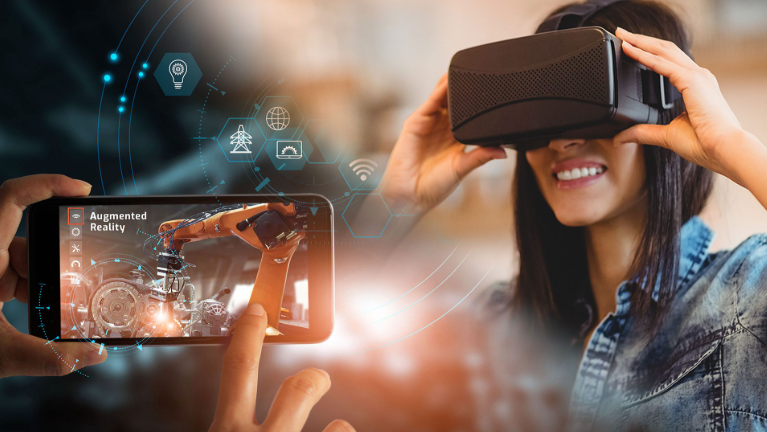
Augmented Reality (AR) and Virtual Reality (VR) are two transformative technologies reshaping how users interact with digital content. AR enhances the real world by overlaying digital elements, while VR immerses users in fully simulated environments. This distinction is crucial for understanding their applications and potential. Exploring their unique features and real-world uses reveals intriguing possibilities. What implications do these technologies hold for industries like gaming, education, and beyond?
Understanding Augmented Reality
Augmented reality (AR) serves as a transformative technology that overlays digital information onto the physical world, enhancing the user’s perception and interaction with their environment.
By creating augmented experiences, AR fosters interactive environments that merge reality with virtual elements, allowing users to engage with data in innovative ways.
This technology opens avenues for creativity, learning, and exploration, empowering individuals to redefine their interactions with the world around them.
Exploring Virtual Reality
Virtual reality (VR) consistently captivates users by immersing them in fully simulated environments that replace the physical world with digital landscapes.
This technology has revolutionized gaming advancements, allowing players to engage in immersive experiences that transcend traditional gameplay.
Key Differences Between AR and VR
While both augmented reality (AR) and virtual reality (VR) offer innovative ways to interact with digital content, their fundamental differences lie in how they blend technology with the real world.
AR technology enhances real environments by overlaying digital information, while VR experiences immerse users in entirely virtual spaces.
This distinction highlights the varying degrees of interaction and escapism each technology provides.
Real-World Applications of AR and VR
The practical applications of augmented reality (AR) and virtual reality (VR) extend far beyond entertainment, influencing various sectors such as healthcare, education, and retail.
In education enhancement, AR and VR provide immersive learning experiences that foster engagement.
Additionally, VR transforms gaming experiences, allowing users to interact in lifelike environments, thereby broadening the scope of creativity and exploration in both educational and recreational contexts.
Conclusion
In conclusion, both augmented reality and virtual reality present transformative opportunities across various fields. While AR enriches real-world experiences by layering digital content, VR transports users to entirely new worlds, enhancing engagement and learning. As these technologies continue to evolve, one must consider: how might our daily lives change as AR and VR become seamlessly integrated into our routines? The potential for innovation and creativity is boundless, promising an exciting future for both industries.