
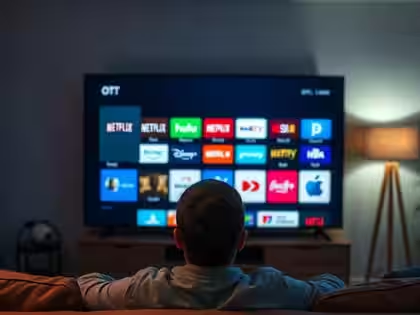
Cable used to be the obvious default for home television, but that’s no longer true for a lot of South Asian households living outside India. More families are moving towar Indian IPTV simply because cable keeps falling short on regional programming. This isn’t about chasing something new for its own sake — it comes down to a real mismatch between what cable companies decide to carry and what regional viewers actually want on screen.
Here’s a closer look at why this option tends to win out over cable when regional coverage is what matters most, along with a few things worth checking before making the switch.
The Regional Coverage Problem With Traditional Cable
Cable lineups are built for the widest possible audience. That usually means national news and a short list of popular entertainment channels get priority. Regional language content — Punjabi, Bengali, Tamil, Telugu, Marathi, Gujarati and others — often ends up stuffed into pricier add-on tiers, assuming it’s offered at all. A few complaints come up again and again:
- Regional channels get bundled into premium packages, so customers end up paying for channels they’ll never watch
- Lineups change with little or no notice and regional channels are often the first to go
- Cable infrastructure in many countries was never really built around South Asian regional broadcasters to begin with
An IPTV service sidesteps this by sending content over the internet rather than through fixed satellite or cable lines, which clears away a lot of the geographic and licensing restrictions that keep traditional broadcasters boxed in.
How Indian IPTV Delivers Better Regional Access
A Broader, More Authentic Channel Library
Since Indian IPTV doesn’t operate under the same regional licensing deals that limit cable, providers can pull together channels from across India’s states into one subscription. That means native-language news, entertainment and devotional channels that most US or Canadian cable providers simply don’t carry.
Real-Time Updates Without Equipment Changes
Getting a new channel added through cable usually means a technician visit or new equipment. With Indian IPTV, channel lists live on the provider’s servers, so new regional channels show up without the viewer touching any hardware.
Flexible Viewing Across Devices
This isn’t limited to one TV hooked up to a single box. Most providers work across smart TVs, Android boxes, Firestick devices, tablets and phones, so people can catch their regional channels at home, at work or wherever they happen to be.
Comparing Indian IPTV and Traditional Cable for Regional Content
| Feature | Traditional Cable | Indian IPTV |
| Regional channel availability | Limited, often bundled in costly add-ons | Extensive, dedicated regional packages |
| Setup requirements | Technician visit, dedicated equipment | Self-setup via app or device |
| Device compatibility | Fixed to cable box/TV | Smart TVs, Firestick, mobile, tablets |
| Pricing flexibility | Rigid long-term contracts | Monthly or flexible plans |
| Channel updates | Infrequent, provider-controlled | Frequent, updated centrally |
| Content focus | Mass-market national channels | Strong regional and diaspora focus |
Why Diaspora Households Are Making the Switch
For Indian families abroad, staying connected to regional content usually isn’t just about entertainment — it’s about keeping something familiar alive for both grandparents and kids growing up far from home. Older relatives who are more at ease in their native language and children who pick up more of it just by hearing it, both benefit from having that programming around consistently. Quite a few families say they didn’t realize how much they’d been missing until after they left cable behind. Among households that do switch, regional access tends to be the reason that comes up first. A dependable IPTV service tends to cover this in a few practical ways:
- Offering subtitle and audio options in multiple languages on select channels
- Carrying devotional and festival programming that cable usually skips
- Providing regional news that keeps families up to date on events back home
- Supporting several connections at once, so different household members can watch different regional channels at the same time
See also: How Technology Drives Business Innovation
Cost Efficiency Without Sacrificing Content Variety
Cable bundles often force customers into an entire premium tier just to unlock a few regional channels. Indian IPTV usually offers dedicated regional packages at a much lower cost than a comparable cable add-on. Without the need for physical lines, installation visits or long contracts, providers can pass those savings on directly rather than folding them into overhead costs.
Many IPTV service providers also offer trial periods, so new users can check channel quality and regional coverage for themselves before signing up for anything long-term — an option cable rarely extends.
Reliability and Picture Quality Considerations
One question people often raise is whether streaming can hold up against the reliability they’re used to with cable. Picture quality from an IPTV service really comes down to internet speed more than anything else. Given a stable broadband connection, most providers stream in HD or even 4K and often outperform the older cable setups still running in plenty of areas.
When buffering shows up, it’s usually a bandwidth issue rather than a problem with the provider and it can often be fixed with a router adjustment or a faster internet plan.
Making the Right Choice for Your Household
Before settling on an IPTV service, it’s worth looking past the price alone and checking:
- How many regional channels are actually in the base package, not just advertised
- Whether it works with the smart TVs or streaming devices already in the house
- How quickly customer support responds to setup questions or technical problems
- Whether there’s a genuine trial option before any long-term commitment
Final Thoughts
Cable was never really designed with South Asian regional programming in mind and that gap has only become more obvious as diaspora communities have grown. Indian IPTV closes that gap with wider regional libraries, broader device support and pricing that lines up better with what viewers are actually willing to pay. For households after real regional coverage without a long cable contract attached, this kind of service is a far more sensible way to stay connected to home.
