Mechanical testing stands at the heart of modern engineering and material science. Every structure, machine, and manufactured product depends on materials that can perform reliably under real-world conditions. Whether it is a bridge carrying thousands of vehicles each day or a small medical implant supporting human movement, the success of these systems depends on how well their materials respond to stress, load, and repeated use.
For engineers, manufacturers, researchers, and quality professionals, understanding mechanical testing is not just a technical requirement. It is a foundation for safety, innovation, and long-term performance. Through carefully controlled experiments, mechanical testing reveals how materials stretch, compress, bend, fracture, and eventually fail. These insights guide better design decisions and reduce costly risks.
This guide explores the full spectrum of mechanical testing techniques, from tensile and compression testing to fatigue and fracture analysis. By explaining how each method works and where it is applied, this article provides a practical and trustworthy overview for anyone seeking to understand material performance in depth.
Understanding the Role of Mechanical Testing
Mechanical testing is the process of applying controlled forces to materials in order to measure their physical and structural behavior. It evaluates properties such as strength, elasticity, hardness, toughness, and resistance to repeated loading. These properties determine how a material will perform when placed under real service conditions.
In practice, mechanical testing connects theory with reality. Material specifications and design calculations are only meaningful when they are supported by experimental data. Testing verifies whether a material meets its intended performance requirements and confirms that manufacturing processes produce consistent results.
Beyond technical evaluation, mechanical testing plays a central role in regulatory compliance, quality assurance, and product certification. In many industries, documented test results are required before products can be sold or used in critical applications.
Fundamental Principles Behind Testing Techniques
Every mechanical testing method is built on scientific principles that ensure accuracy and reliability. One of the most important principles is controlled loading. Forces are applied gradually and precisely so that material response can be observed without introducing sudden shocks that distort measurements.
Repeatability is another essential principle. Tests must be performed under standardized conditions so that results can be compared across laboratories and over time. This consistency allows engineers to build reliable databases of material behavior.
Sample preparation is equally critical. Test specimens must follow specific dimensions, surface finishes, and orientations. Even minor deviations can influence stress distribution and lead to misleading conclusions.
Measurement accuracy also underpins effective mechanical testing. Load sensors, displacement gauges, and extensometers must be properly calibrated and maintained. Reliable data depends on the integrity of the entire testing system.
Tensile Testing and Elastic Behavior
How Tensile Testing Works
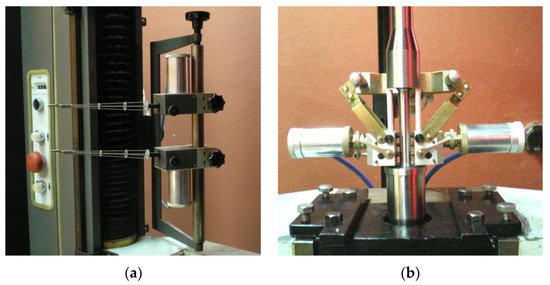
Tensile testing is one of the most widely used mechanical testing techniques. It involves pulling a material specimen along its length until it deforms and eventually fractures. Throughout the test, the applied force and resulting elongation are continuously measured.
This process produces a stress-strain curve, which reveals how the material behaves under tension. From this curve, engineers can determine key mechanical properties that guide design and material selection.
Key Properties Measured in Tensile Tests
Tensile testing provides information about tensile strength, yield strength, modulus of elasticity, and elongation. Tensile strength indicates the maximum stress a material can withstand before failure. Yield strength marks the point at which permanent deformation begins. Modulus of elasticity reflects stiffness, while elongation shows ductility.
These properties help engineers predict how materials will respond to stretching forces in applications such as cables, fasteners, and structural components.
Compression Testing and Load-Bearing Performance
Compression testing evaluates how materials behave when subjected to squeezing forces. Unlike tensile testing, which pulls materials apart, compression testing pushes them together.
This method is especially important for materials used in load-bearing applications, including concrete, ceramics, foams, and certain polymers. During the test, a specimen is compressed between two plates until it deforms or fails.
The results reveal compressive strength, deformation characteristics, and resistance to buckling. These values are essential in construction, packaging, and insulation industries, where materials must support heavy loads without collapsing.
Read Also: How Technology Drives Business Innovation
Hardness Testing and Surface Durability
Hardness testing measures a material’s resistance to localized surface deformation. It provides insight into wear resistance, scratch resistance, and machinability.
Different hardness testing methods use specific indenters and loads to create impressions on the material surface. The size or depth of the indentation is then used to calculate hardness values.
Hardness testing is widely used in quality control and heat treatment verification. It helps manufacturers confirm that materials have been processed correctly and will perform reliably under friction and contact stress.
Impact Testing and Fracture Resistance
Impact testing evaluates how materials respond to sudden, high-energy loads. It measures toughness, which is the ability to absorb energy before fracturing.
In a typical impact test, a pendulum strikes a notched specimen, and the energy absorbed during fracture is recorded. The notch creates a stress concentration that simulates real defects or cracks.
This type of mechanical testing is crucial for materials used in environments where shock loading is common. Automotive components, pipelines, and structural steels rely on impact testing to ensure resistance to brittle failure, especially at low temperatures.
Fatigue Testing and Cyclic Load Behavior
Understanding Material Fatigue
Fatigue refers to the gradual weakening of a material under repeated loading and unloading. Even when applied stresses are below the material’s ultimate strength, microscopic cracks can form and grow over time, leading to sudden failure.
Fatigue is responsible for many real-world structural failures, making fatigue testing one of the most important mechanical testing techniques.
Methods Used in Fatigue Testing
Fatigue testing subjects specimens to cyclic stresses at controlled amplitudes and frequencies. These tests determine fatigue life, endurance limits, and crack growth behavior.
The resulting data helps engineers estimate how long a component can operate safely under repeated loads. This information is essential for aircraft structures, rotating machinery, and mechanical joints.
Flexural and Bending Tests for Structural Analysis
Flexural testing examines how materials behave when bent. It is commonly used for beams, plastics, wood, and composite panels.
In this test, a specimen is supported at specific points while force is applied in the center or at multiple locations. This creates bending stress and allows measurement of flexural strength and stiffness.
Flexural testing is especially valuable for products that experience bending during use, such as flooring panels, electronic housings, and furniture components.
Creep Testing and Long-Term Deformation
Creep testing evaluates how materials deform over time when exposed to constant stress, often at elevated temperatures. Unlike tensile or compression testing, which focuses on short-term behavior, creep testing examines long-term stability.
During a creep test, a constant load is applied for extended periods, sometimes lasting months or years. The gradual deformation is monitored to assess creep resistance.
This form of mechanical testing is essential in power generation, aerospace, and chemical processing industries, where components operate under sustained stress and high temperatures.
Fracture Mechanics and Crack Propagation Testing
Fracture mechanics testing focuses on how cracks initiate and grow within materials. Rather than measuring overall strength, it examines the resistance to crack propagation.
These tests help engineers understand how defects influence structural integrity. They are particularly important in safety-critical applications where small flaws can lead to catastrophic failure.
By combining fracture testing with fatigue analysis, engineers can develop more reliable inspection and maintenance strategies.
Standards and Quality Assurance in Mechanical Testing
Standardization ensures that mechanical testing results are consistent, reliable, and globally accepted. International and national organizations define detailed procedures for sample preparation, equipment calibration, testing conditions, and data analysis.
Following recognized standards supports regulatory compliance and customer confidence. It also allows manufacturers to compare their materials with industry benchmarks.
Quality assurance systems rely heavily on standardized mechanical testing. Regular audits, internal controls, and documentation ensure that test data remains accurate and trustworthy.
Practical Applications Across Industries
Mechanical testing influences nearly every sector of modern industry. In manufacturing, it supports supplier qualification, process optimization, and final product inspection. Engineers use test data to refine designs and reduce material waste.
In construction, testing verifies the strength and durability of structural materials. Bridges, buildings, and transportation systems depend on reliable data for safety and longevity.
The automotive and aerospace industries rely on mechanical testing to meet strict safety and performance requirements. Components are evaluated for fatigue resistance, impact strength, and thermal stability.
In medical technology, implants and devices must meet precise mechanical standards to ensure patient safety. Testing validates their ability to withstand bodily forces over long periods.
Energy and resource industries use mechanical testing to assess materials used in pipelines, turbines, and drilling equipment. These applications often involve extreme pressure and temperature conditions.
Challenges and Limitations of Testing Techniques
Despite its value, mechanical testing has inherent limitations. Laboratory conditions cannot perfectly replicate complex real-world environments. Factors such as corrosion, humidity, and multi-directional loading may not be fully represented.
Sample variability can also affect results. Minor defects, surface irregularities, or inconsistencies in processing may influence measurements.
Advanced testing equipment and skilled personnel require significant investment. Smaller organizations may face challenges in accessing comprehensive testing services.
Interpreting data requires expertise and context. Mechanical properties must be evaluated in relation to design requirements, safety margins, and operating conditions.
Future Trends in Mechanical Testing
Mechanical testing is evolving alongside digital and materials technologies. Automation and robotics are improving consistency and reducing human error. Smart sensors and data analytics are enabling deeper insight into material behavior.
Non-destructive testing methods are becoming more sophisticated, allowing engineers to assess components without damaging them. This approach is particularly valuable for in-service inspections.
Digital simulation and experimental testing are increasingly integrated. Virtual models are calibrated using physical test data, enabling more accurate performance predictions.
Sustainability is also shaping future testing practices. Researchers are developing methods to evaluate recycled and bio-based materials, supporting environmentally responsible manufacturing.
Frequently Asked Questions About Mechanical Testing
What is mechanical testing used for?
Mechanical testing is used to measure how materials respond to forces, stress, and repeated loading. It helps ensure that materials and products are safe, reliable, and suitable for their intended applications.
Is mechanical testing always destructive?
Many mechanical testing methods are destructive and involve breaking or permanently deforming specimens. However, some techniques, such as certain fatigue and non-destructive methods, can evaluate materials without causing complete failure.
How long does mechanical testing take?
The duration depends on the test type. Tensile and hardness tests may take minutes, while fatigue and creep tests can take weeks or months.
Who performs mechanical testing?
Mechanical testing is typically conducted by trained technicians, engineers, and accredited laboratories using standardized equipment and procedures.
Can mechanical testing prevent product failure?
Mechanical testing cannot eliminate all risks, but it significantly reduces failure probability by identifying weaknesses and validating designs before mass production.
How are test results used in design?
Engineers use test data to select materials, determine safety factors, optimize component geometry, and predict service life.
Conclusion
From tensile and compression testing to fatigue, creep, and fracture analysis, mechanical testing provides a complete picture of how materials behave under real-world conditions. Each technique reveals specific aspects of strength, durability, and reliability, enabling engineers to design safer and more efficient products.
By combining standardized procedures, accurate measurement, and expert interpretation, mechanical testing transforms raw materials into dependable components. Its influence extends across construction, transportation, healthcare, energy, and manufacturing, shaping the quality and safety of modern life.
Although laboratory tests cannot perfectly reproduce every service environment, ongoing advances in automation, digital modeling, and non-destructive evaluation continue to enhance accuracy and relevance. For professionals and organizations committed to quality and innovation, mastering mechanical testing techniques is not merely a technical requirement. It is a strategic investment in performance, trust, and long-term success.